Virtonomics

Virtonomics
Virtonomics Online Business Game

Monday, January 11, 2016

Q&A - Any questions?

Virtonomics - Lien Ledger

Q&A with Lien Ledger staff.


Please post your questions in the comments below and our editorial staff will respond with a full article addressing each question.

You can ask a question about real world business and economics.  For example, what does Lien Ledger think of the boom in smart phones and where is the market headed.  For these types of questions, we'll respond with research on the real market and provide our opinion. If possible, we'll tie it into Virtonomics if there are similarities.

You can also ask a game question.  For example, can players in Virtonomics collaborate on business ventures?  We'll provide an in-depth answer on the game question and, if possible, provide real world tie-ins as well.

We'd really appreciate comments on the regular blog posts or questions left in this post to make this blog more interactive and more useful to our faithful readers.

Best Regards,

G_Money
Editor-in-chief


Sunday, January 10, 2016

Autos High-end Market - High Ticket Price but High Barriers to Entry

Virtonomics - Lien Ledger

The high end-auto industry is competitive yet lucrative. Demand is driven by consumer spending and interest rates among other factors.


Markets ebb and flow.  Check out this interesting article on the China luxury car market.


AFP New Agency: The luxury-car party is over in China


And here's an neat chart on a sub segment: junior luxury cars.


Speaking of the auto industry, another exciting DISkA report has been published for the Virtonomics Lien realm.  The 9 January 2016 report, entitled "Cities on retail goods of «Automotive goods» category", is a fascinating read on the Lien realm auto industry.  A snapshot of selected data is below:


I've highlighted Tokio.  The market is HUGE, almost 30 billion in sales.  Of the amount, 8 billion is classified as low-competition.

However, autos is a tricky market in Virtonomics.  Due to rare resource requirements and a high cost of materials it is hard for many players to enter the market on the production side.  In that way it's similar to real life with high barriers to entry.

That being said, most of the top players in the Lien realm have figured out how successfully participate in the auto industry. 

I had my four-eyed number cruncher do some extra analysis for players who want to retail autos but cannot crack into the auto production club.

What we found: There are sedans quality 23 on the wholesale market in Uzbekistan for 260,000.  They can be shipped and retailed by the enterprising player in the Tokio market for 400,000-500,000.  

Come check it out at www.Virtonomics.com!


Saturday, January 9, 2016

Sovereign Wealth Funds - Pulling back the curtin

Virtonomics - Lien Ledger

Sovereign Wealth funds.  Ever picture yourself rolling around in all that money?  The funds are for the most part hush hush and usually have light oversight and little regulation.


Here's a little transparency.  The next chart shows where the sovereign wealth comes from and who invests it.


A lot of sovereign wealth comes from oil.  As the next chart shows, the oil price free-fall is causing countries like Kazakhstan trouble.


I bet you're wondering if Virtonomics has anything similar to sovereign wealth funds.  I'm glad you asked, they do!  Let's look at the Estonia region in the Virtonomics Lien realm.


The $335,940,637.39 figure is basically a sovereign wealth fund.  Cities (mayors), regions (governors) and states (presidents) each have budgets and treasuries.  You can see the very high level Estonia region budget in the chart above.  There are special public works projects that the governor can choose to spend the funds on.  Taxes can also be increased or decreased to build or bleed the treasury.

Which country in the Virtonomics Lien realm has the largest treasury and healthiest budget?  Well, just as in real life, the public data on this is hard to come by.  But, strategically position your enterprise and align with the right powers, and you'll eventually be playing with he big boys.


Friday, January 8, 2016

Energy Industry Polution - Despair and Optimism

Virtonomics - Lien Ledger

Do you ever feel like this?


That's the face an environmentalist makes when thinking about pollution from the energy industry.


The chart below provides for more indigestion.


Well, it's not all bad news.


Energy-related carbon dioxide is going down steadily.


And regarding clean energy wind power...


...the two biggest polluters in the world are stepping up.


What about renewable energy?


Very promising!


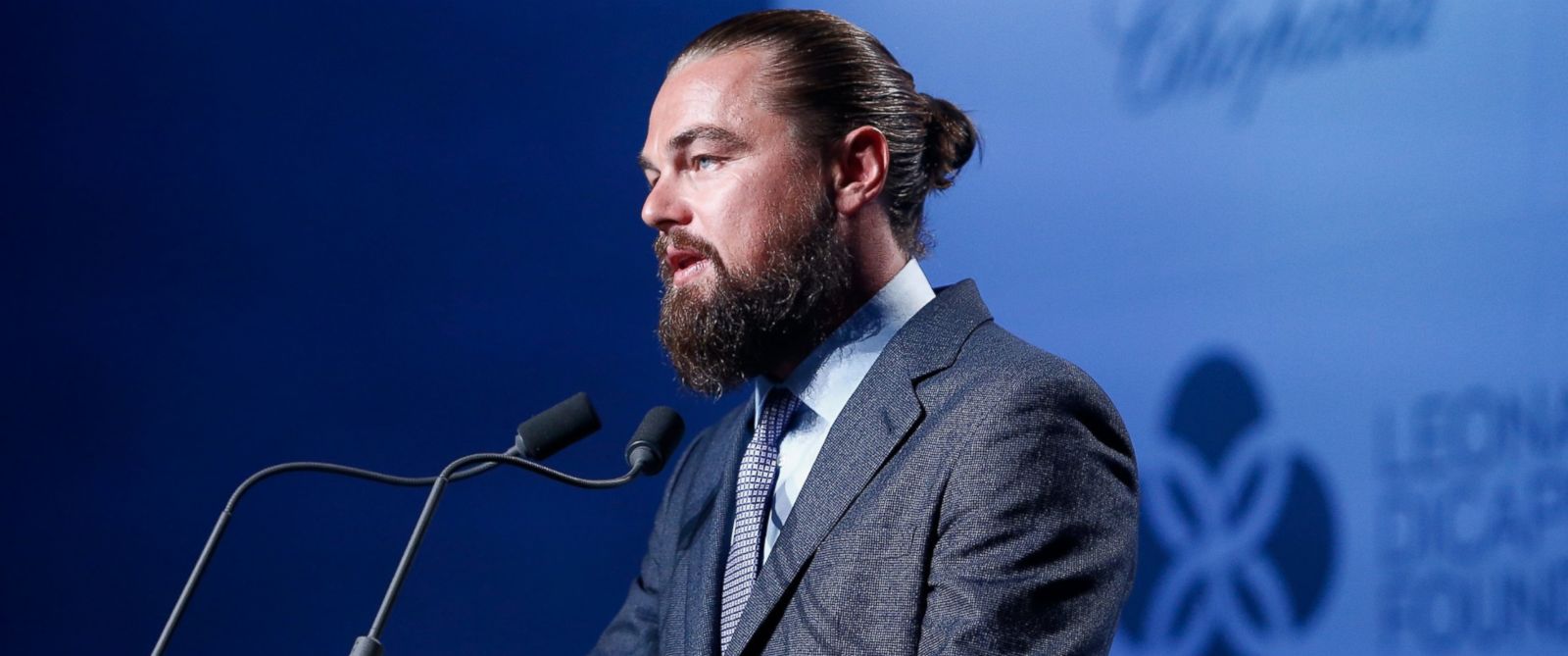
And our friend Leonardo DiCaprio thinks the U.N. Climate Conference in Paris was a step in the right direction abcnews.


All of this brings us to an important question.  Is the situation the same in the Virtonomics Lien virtual realm?  Is it doomsday, or is there a brighter side?

Let's look at the data below.


Per Lien ecologists, the level of safety recommended is 1.40 (updated once in a virto-year depending on overall ecological situation).

The actual level of ecological safety is up to 4.60, well above the "danger level" of 1.40.  Additionally, the linear trend lines show that there is a correlation between increasing privatization of power plants and increasing ecological safety of power plants.  This most likely means that incentives are aligned correctly.

Lien has 3 types of power plants.  They are listed below:


Coal power plant power plants that consumes coal.
    Fuel oil power plant Fuel oil is a consumable. It has a small environmental benefit compared to coal powered plants.

    Incinerator A type of power plant without consumables that uses garbage collected from cities.  Accordingly, the stations of this type in a large part are helping the city to solve the problem of garbage disposal. But it has very high operating costs and reduced environmental friendliness.


There are some public works projects that contribute to a virtual green world as well.  A few examples:

Treatment facilities Construction and modernization of city treatment facilities will allow to lower significantly the level of environmental problems connected with the industrial drains. The project increases popularity of the mayor. Construction and modernization of city treatment facilities will allow to lower significantly the level of environmental problems connected with the industrial drains. The project increases popularity of the mayor.

Ecological monitoring of power plants The system of ecological monitoring will allow to lower significantly the level of ecological problems connected with atmospheric emission from power plants of the city. However, the city will refuse to purchase the electric power from those power plants of a city grid, which level of ecological safety (technological level multiplied by efficiency) is less than the value recommended by ecologists. The current recommendations of ecologists can be found on the "Tariffs for the electric power" tab of the city management pages. The project increases popularity of the mayor.

City program of garbage utilization The municipality will allocate funds for improvement of garbage utilization systems, for modernization and revitalization of city dumps. It will allow to lower significantly the level of ecological problems connected with garbage. The project increases popularity of the mayor.

Traffic intersection Construction of a new traffic intersection will allow to cut down by 50% the transportation expenses of the enterprises in the city (products delivery within this city) and will lower the level of the environmental problems connected with motor transport. The project increases popularity of the mayor.

Ecological police Creation of ecological police will allow to lower level of the environmental problems connected with garbage, motor transport and industrial drains, in all cities of the region. However, expenses of the region on ecology will increase by 15%. Besides, for ecological needs all additional subsidies will be redirected to municipal budgets of the problematic cities, if those are provided by the region budget.


So it is not all doom and gloom in real life or in the Virtonomics Lien realm.  But we do need to stay vigilant and stay the course if we want to save our planet!

Apparel Industry - Early Warning Indicators or False Alarm?

Virtonomics - Lien Ledger

Are people wearing less apparel these days?


We'll get to that in a minute...

First a serious discussion of the data.

The graph below shows supply side carnage in the real world US apparel industry.  It tells a story of shifting competitive advantage and the resulting and inevitable transfer of production.  


In the Virtonomics Lien realm, something more ominous may be happening. 

Let's take a look at a few global suppy/demand charts, focusing on the demand side.


The light teal bars represent units of global consumption over the last 60 weeks.  The trends we're seeing are not seasonal.

Shirts, demand down.  Jeans, also down.

Dress, suits, shoes?  Down!  Down!  Down!

This decrease in global clothing consumption, if not reversed, will result in a decrease in production not just in one country, but in the majority of countries.

Are the virtual consumers in Virtonomics Lien realm walking around half clothed?  Some in the buff?!?  Who knows the root cause.  I can confirm Lien global population is growing, so deaths (natural or unnatural) do not seem to be the cause.

We'll revisit the apparel industry in the future and see if demand recovers, or if pain felt on the supply side slowly reduces global production capacity.

Reports shown are found in Analytics > Market analysis section of www.virtonomics.com.


Thursday, January 7, 2016

Toy Manufacturing and Low Cost Production Centers

Virtonomics - Lien Ledger

An interesting article was published in the WSJ yesterday evening titled: India Has Designs on Toy Manufacturing - Suppliers seek out new opportunities as labor costs rise in China. 


The article can be found in full at the end of this post.  It discusses low cost manufacturing moving from China, to Vietnam and now to India.

This made me think that I need to pull the four-eyed number cruncher out of the closet where I keep him locked up and have him compile some figures on the best low-cost manufacturing centers in the Lien realm of
Virtonomics.


I apologize for the small typeface.  Be assured, I slapped my four-eyed number cruncher aside the head and told him to produce pretty charts and graphs next time.

What this data shows is that China in general and Hefei in particular are great places to produce in the Lien realm. Hefei is at only 18% of the realm average salary cost, has only a 14% higher average salary cost than the lowest average salary cost and Hefei has 138% of the realm average education level!  Also, if you sell to the China market from Hefei, no customs and low transport costs are to be expected. 

If the interesting picture from the WSJ at the top of this post has you thinking about the toy business, never fear.  Toys are a product that is easy to produce and retail in
Virtonomics.

In summary, China in the
Virtonomics Lien realm may be a little behind real world China when it comes to rising labor costs.  For both new and established players it's still a fine place to do business.


The Wall Street Journal
India Has Designs on Toy Manufacturing

Suppliers seek out new opportunities as labor costs rise in China; from farms to factories
By Raymond Zhong

Jan. 6, 2016 7:11 p.m. ET
KAKINADA, India—Entrepreneur  Ajay Sinha made stuffed toys in China for a decade before he started doing something almost unheard-of in his industry: manufacture in his native India.

At Mr. Sinha’s new factory here recently, dozens of sari-clad women assembled Elmo dolls for  Hasbro Inc.,  cutting furry red fabric, running it through sewing machines and stamping plastic eyes into smiling faces using a hydraulic press.
As rising wages push production of T-shirts, sneakers and teddy bears out of China, countries with lower labor costs and proximity to Chinese supply chains, such as Vietnam and Cambodia, have picked up much of that business. But India, with its enormous pool of workers willing to sew and operate machinery for even less compensation, is trying to establish itself as a contender.

Labor-intensive manufacturing represented the first rung on the ladder of industrial development for a host of Asian countries. That makes the success of companies like Mr. Sinha’s a bellwether of India’s potential to raise millions of people out of destitution like those nations did: by luring them off small farms and into steady if low-skilled factory work.
In the world’s second-most-populous country, manufacturing wages today are less than half China’s, after adjusting for productivity: $5.36 an hour compared with $14.60, according to Boston Consulting Group. Labor will be abundant and wage-growth stable, some factory owners reckon, for more than a decade.

Whether that is enough to offset other shortcomings that have stymied India’s rise as an export power—including roads and ports that badly need upgrading, power cuts and cumbersome bureaucracy—remains to be seen.
China won’t be the world’s toy workshop forever, said Mr. Sinha, president of Pals Plush Ltd. “The kind of labor we need, for the next 15 years there’s nowhere to beat India.”

Pals Plush’s new plant is in a 16-square-mile special economic zone in Kakinada, on India’s southeastern coast, where exporters enjoy incentives from the federal and state governments, including tax-free imports of materials.
The factory’s 500 workers, all of them women from nearby farming villages, earn monthly salaries and benefits valued at around $100, or around a third, per hour, of what Pals Plush pays in China. Many of the women said they had never held a formal job before, and that factory work was a way to achieve financial independence.

Heads of several China-based toy makers who came to scout Kakinada recently said they had high hopes despite the unfamiliar environment. The businessmen snapped photos of monkeys scampering up buildings and of garbage in the streets.
Leo Cheng of Wing Fat Paper Box Co., a Hong Kong-based producer of board games, stationery and electronics, said setting up in India would be little different from his experience, 30 years ago, expanding into mainland China. Factory technology and know-how were just as scarce. “They had workers, nothing else.”

John Leung, chairman of GFT Group Ltd., a manufacturer of Transformers, “Star Wars” and other toys for Hasbro that is based in China’s Guangdong province, said he plans to start producing soon from a rented factory in Chennai.
Eight years ago, GFT shifted much of its production from China to Vietnam, where today the company’s workers earn around $215 a month, less than Chinese counterparts’ salaries. But Vietnam is quickly becoming saturated with factories, Mr. Leung said.

“In the next eight to 10 years, Vietnam will be finished,” he said. He said Hasbro, based in Pawtucket, R.I., had urged him to set up shop in India.

Though his Chennai workers’ monthly wages will be around $110 each, Mr. Leung said he doesn’t expect to turn a profit in India for at least three years, given the costs of training workers and importing raw materials.
Getting an Indian business license has been a laborious, months long process, Mr. Leung added. “They make it very difficult.”

Julie Duffy, a Hasbro spokeswoman, said although Hasbro has begun sourcing from India, Vietnam, Indonesia and other countries, “We expect that China will continue to be where the vast majority of our product is manufactured in the foreseeable future.”
Mr. Sinha of Pals Plush grew up near New Delhi and set up his first toy factory close to the capital in 1995. But it was costly and slow to import all his materials through Mumbai. Heavy rains could bring rail lines to a halt. Customs and other procedures were burdensome.

After five years, he said, “I was totally defeated.”
He moved to the eastern Chinese city of Hangzhou, where his factories have produced soft toys for  Walt Disney Co. ,  Wal-Mart Stores Inc.,  Williams-Sonoma Inc.  and others.

But in 2010, Mr. Sinha found himself with a large Christmas order for Disney and not enough manpower to fill it. He said he “paid through the nose” to bus in temporary workers. In China, “aspirations have changed,” he said. “Nobody wants to be on a sewing machine anymore.”

He started looking elsewhere. He ruled out Sri Lanka, which was still recovering from its decades long civil war. He was wary of political instability and natural disasters in Bangladesh. Labor and construction costs were low in Cambodia, but he worried about corruption. He ended up buying land in Sri City, an industrial estate in India’s Andhra Pradesh state.
India’s infrastructure is better than it was 20 years ago, Mr. Sinha said, and more government clearances are computerized. After two years manufacturing for Disney in Sri City, he signed a deal with Hasbro and built the Kakinada factory.

To help maintain product quality, Mr. Sinha last year hired six managers from southern China.
“People’s way of thinking here—it’s opposite to ours,” said  Chen Xiaolin, originally from Sichuan province, as he watched workers milling about and listening to instructions at the end of a shift. “If it were us having a meeting, we’d line up neatly.”

India’s lower labor costs mean that even though Mr. Sinha needs to import all of the specialized fabrics he uses and his Indian workers are less productive than Chinese ones, he can still afford to offer buyers a discount on his India-made toys—and keep the same profit margin, he said.
Still, patriotism played a role in his decision to move his business back to India. “This is our country, above all.”

 

Wednesday, January 6, 2016

Estonia Transport and Moral Obligations

Virtonomics - Lien Ledger


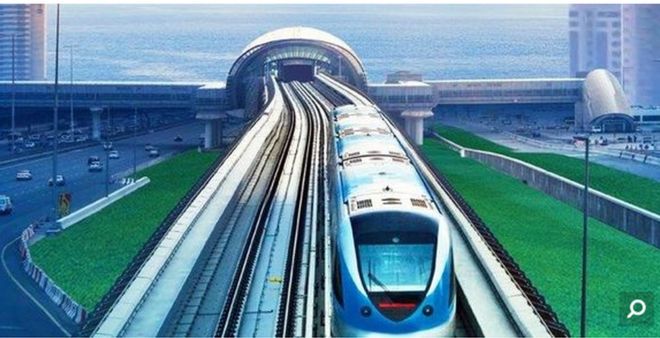
A BBC News article was published today: Finland and Estonia undersea railway:Tunnel solution examined (click to read).


It discusses a Warsaw to Tallinn high speed rail along the Baltic that will most likely now include a Tallinn to Helsinki link under the Baltic.

This made me think deeply about Estonia area transport considerations in the Virtonomics Lien realm.  Transport to/from Estonia (Lien realm) is carried out by plane, train, ship and local trucking.  Planes carry the most volume in Estonia’s global trade and are the most expensive method of transport.  So what is the President of Estonia (Lien realm) doing?  Working with the unions to lower airfare costs (represented by the red arrows in the picture below).


Another key to international commerce is customs.  The President of Estonia (Lien realm) is lowering export customs and believes in free trade! (represented by red -1% in the picture below).


This Estonia issue has also made me worry about my moral obligation for journalistic independence when publishing news content on this blog.  Full disclosure may remove this weight from my chest. 

I, G_Money, am the president of Estonia in Virtonomics Lien realm!  So this article may be a little self-serving, but at least I’m above board.

Transportation and customs are very interesting and important game play features in Virtonomics.
 
Come check it out!  www.Virtonomics.com